
Reflections from the Field: the Climate Commons Fund in Nanyuki
By Sarah Hathiari
If you received your monthly income five times over in one go, what would you do with it?
As our team recorded recipients' monthly incomes, the contextualised significance of the US$750 dawned on us. The recipients of our Climate Commons Fund pilot in Kenya are community members from seven villages in the Il Ngwesi Conservancy, rooted in the traditions of the Maasai tribe. They represent men and women of diverse ages, households, and assets. Their lives are in many ways entirely different from ours. Yet we resonated with their needs and hopes beyond differences of our norms and experience. We captured these insights in our baseline surveys conducted between 11th and 13th August.
Money, Livestock, and Hard Choices
Individuals of the Il Ngwesi community largely depend on herding and grazing for income. For most households, men were the head of household and main earners. Several women contributed through income of their own, though their primary role remains caregiving. Education is valued significantly in the community. Revenues from the conservancy’s commercial activities are distributed as high-school education bursaries paid directly to schools, a critical support that protects children's educational access during financial hardship.
Household incomes ranged from less than 1,000 KES (roughly US$8 per month) to 45,000 KES (US$350 per month). For some, the lump sum is equivalent to up to 8 years of earnings. When asked about urgent unmet needs, many who were renting or living with parents stated they wanted to buy land or a house. Some wanted to invest in livelihoods by purchasing seeds, poultry, cows, or farmland. 24 of the 28 individuals listed food as their an immediate spending priority, followed by school fees, clothing, rent, medicines, and household needs. 12 people had saved some money in the last year, while only 8 had taken out loans to support various needs. Belonging to a chama, an informal cooperative that pools savings for collateral and loans, meant that some women had better access to financial liquidity than men. Almost every interviewee reported that their financial circumstances were unstable.
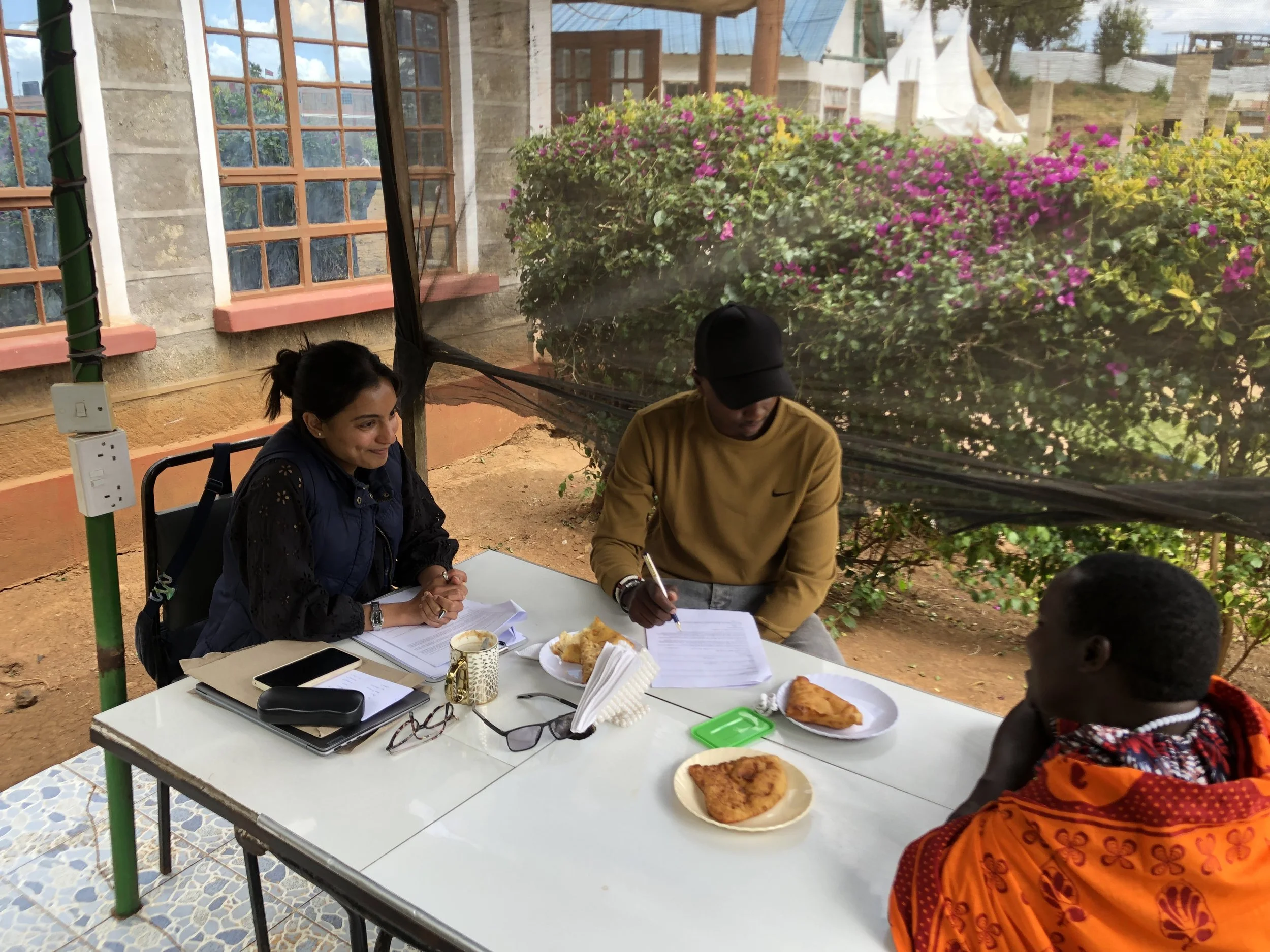
Sarah and Evans conducting a baseline survey with a cash recipient
Relationship to the conservancy
The attachment of the village communities to their conservancy was evident. 27 participants had relied on the conservancy for some form of income or resource. Women earned income through bead-jewellery making, which they sold to tourists visiting the conservancy. Others earned income by building facilities such as u-bends in the conservancy or through ranging activities such as wildlife patrolling. 18 people said they had engaged in unpaid voluntary work to protect the conservancy. Overall, the community held a positive outlook on the conservancy's health. 24 interviewees said they had seen more wildlife over three years; 21 reported more trees and shrubs. At the same time, some answers provided a mixed picture: 18 reported reduced water availability while 15 also noted less eroded ground. Overwhelmingly, interviewees felt the community had a positive effect on nature, wildlife, and preservation for future generations.
But this relationship is not without tension. 16 participants noted human-wildlife conflict affecting their livestock. In fact, during one of our interviews, Paul the Conservancy Manager, received a call that an elephant was crossing grazing fences and in villagers tried defending their livestock which resulted injuring the animal. Conservancy managers called vets while rangers stabilised the conflict. These are the realities in which communities operate under resource constraints and droughts, where livestock is often their only asset. Some interviewees reported witnessing overgrazing or villagers burning or collecting prohibited materials within the conservancy. The point of unconditional cash, unlike other forms of adaptation finance grants, is to test whether higher income reduces the need for extraction or crowds out extractive practices in the first place.
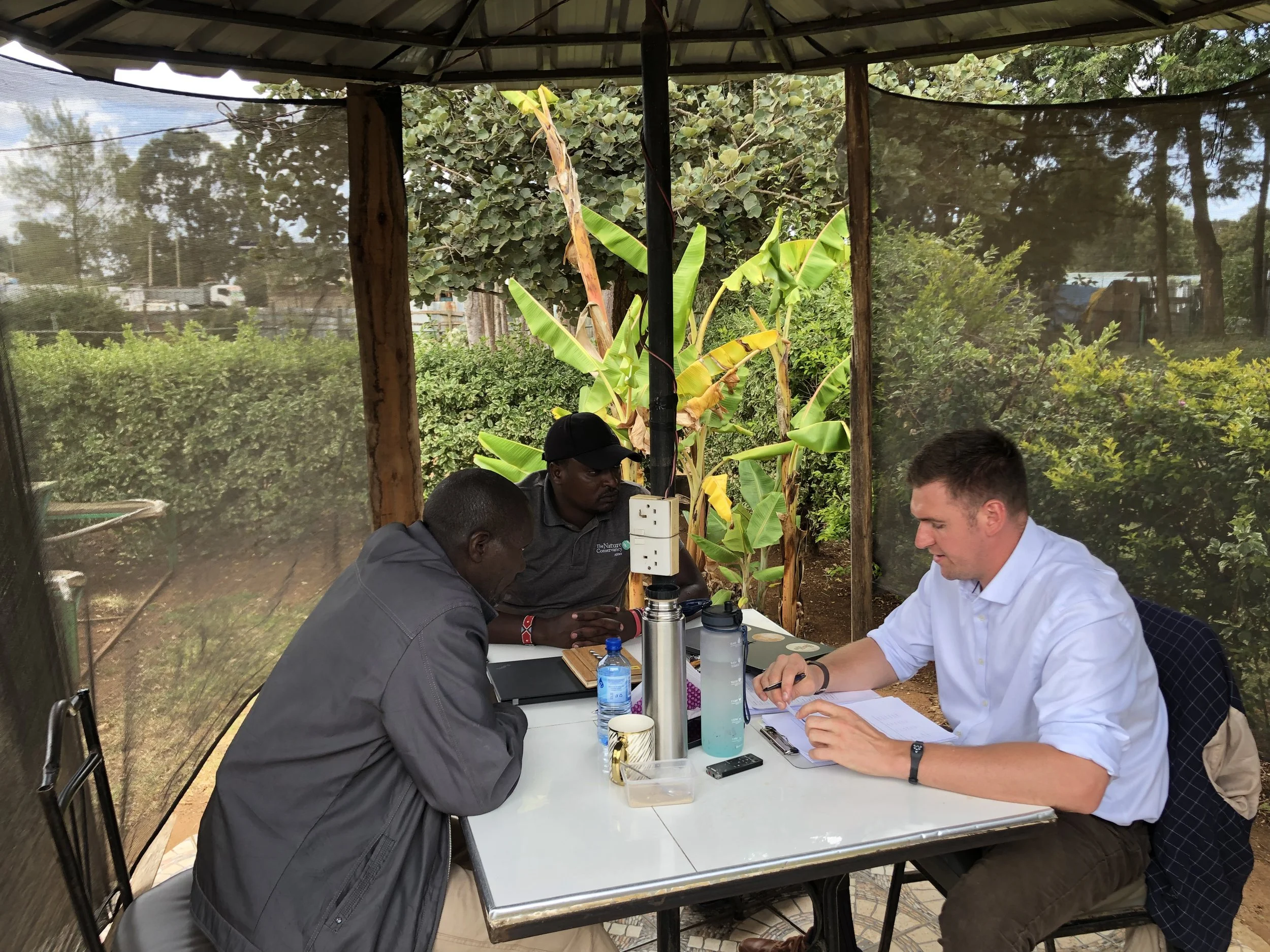
Patrick and Paul conducting a survey with a cash recipient
Climate Change, Drought, and Heat
Drought and extreme heat were the highest reported climate impacts. 13 reported experiencing two or more climate impacts simultaneously. Many lost some access to water, food, livestock, and income, constraining resources further. One woman reported that droughts push elephants closer to human settlements in search of water, increasing human-wildlife conflicts. Another described how longer grazing distances meant leaving home for extended periods, one time during which her home was raided and assets stolen.
Most participants identified financial circumstances as a barrier to coping with climate change effects. What was remarkable was the recognition of the term "climate change" itself. For a community where English is weak and mostly spoken by the youngest, climate change had become woven into their taxonomy because of the hardship it caused. Few recognised gender as a specific or amplified barrier to adaptive capacity. One woman, however, noted that she had fewer income-generating options than men, limiting her financial ability to cope. Another said seeing her livestock affected by climate change caused stress that reduced her own resilience. Unconditional cash cannot resolve climate shocks, but it may reduce the financial stress they impose on individuals, particularly on women, who may carry greater caregiving responsibilities, or the elderly, who have fewer options to earn.
Choosing Our Own Path
In those two days in Timau, Meru County, our teams, translators, and participants bonded over cups of chai, plates of samosas, and bridges between languages. We learned that Maji means water, Mavazi means clothes, and unfortunately, climate change means hardship. For communities like Il Ngwesi, climate change has already been impacting them for years, despite their decades of stewardship and conservancy work. The least we can do is ensure they have the means to invest in their own adaptive capacity.
Can pesa mean hope? Unconditional cash is often criticised in an age of resource constraints. ‘Wouldn't targeted, in-kind solutions be wiser than risking frivolous spending?’ During the interviews, we sat with Paul Olekimiri, Il Ngwesi's Community Manager. He reflected that traditional community investments like schools, health centres, and water projects have brought important benefits, but they cannot reach everyone like money does. A school cannot directly benefit someone without children. Therefore, cash gives people something those projects cannot: agency.
Conservancy manager Paul Kimiri reflecting on the potential of the Fund
When you receive five months of income in one lump sum, as our recipients did, the stakes of that choice become real. By putting resources directly into community members' hands, people decide how best to use them according to their own needs and priorities. For Paul, this represents a new story in conservation benefit-sharing, one that emphasises equity, choice, and community agency. For Equal Right, it is also about rewarding existing stewardship of the conservancy – to advocate for what is just. Now that payments have been made and baselines conducted, our team will continue engaging with the community over the coming year before returning to conduct the endline survey in twelve months.
