
An Agenda for a World in Transition
Carlos Pérez
- LATAM Director at Equal Right
With an international system in crisis and a juncture that demands a structural just transition, how can we revive and reform multilateralism for a better, inclusive future?
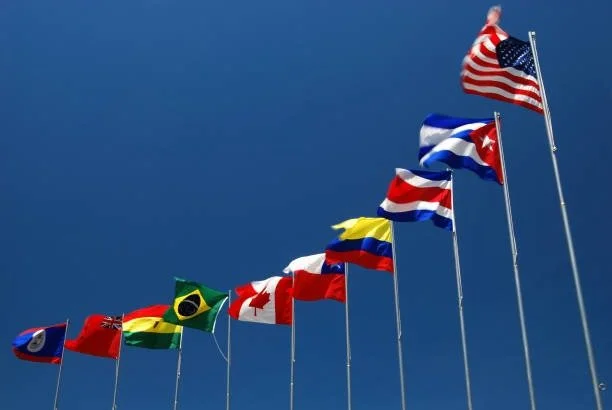
Recent global developments have once again brought international relations into sharp focus. Situations such as the unfolding crisis in Venezuela, coincide with growing geopolitical tensions linked to energy, among other strategic resources. These moments are not isolated. They point to deeper structural challenges in an international system that often struggles to respond coherently to political crises, environmental limits and socioeconomic inequality. From its work on climate justice and economic security, Equal Right approaches this context as an invitation to rethink how international cooperation can better protect the environment and reduce systemic risks through supporting a collective just transition in an increasingly interdependent world.
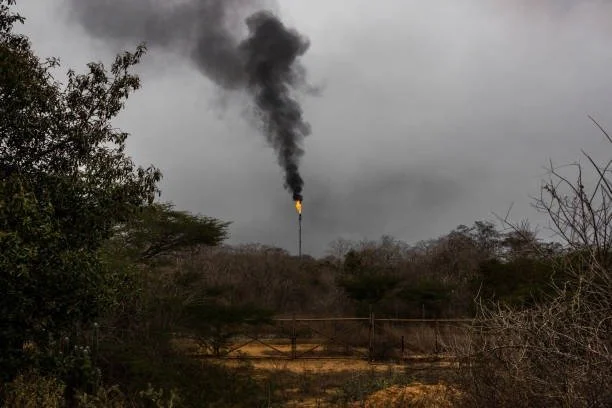
At the centre of many of today’s international tensions lies the continued dependence on fossil fuels. Oil and gas remain deeply embedded in global economic and political relations, shaping incentives, alliances and power asymmetries, particularly in moments of crisis or transition. Although often treated as ordinary commodities, hydrocarbons are finite resources whose extraction and use generate social, environmental and political consequences that extend far beyond national borders. Yet their governance remains fragmented, marked by weak multilateral coordination and limited shared rules, leaving space for unilateral decisions and uneven outcomes.
This governance gap is where Cap and Share becomes relevant. Rather than addressing fossil fuels only as a climate issue, Cap and Share introduces a simple systemic principle at the international level: shared limits on fossil fuel extraction, combined with an equitable distribution of the value generated. By recognising oil and gas as part of the global commons, resources owned by all and for the benefit of all, this approach reframes energy as a collective challenge and offers a way to strengthen cooperation during our current transition.
The importance of Cap and Share in todays’ context lies less in its technical design than in what it represents for international relations. Approaches of this kind illustrate how clearer rules over shared resources can reduce incentives for unilateral action and help stabilise multilateral arrangements that are currently under strain. In a world where environmental thresholds are increasingly visible and geopolitical competition remains intense, the absence of such frameworks continues to expose both institutions and populations to heightened risk.
However, transitions cannot be sustained through resource governance alone. Large-scale transformations, whether driven by environmental necessity, political change or economic restructuring, inevitably redistribute risks and uncertainty. When these pressures are left unaddressed, they weaken social cohesion and erode trust in both domestic institutions and international cooperation. This social dimension is often underestimated in debates on global governance, yet it plays a decisive role in the stability and legitimacy of transition processes.
From this perspective, policies that guarantee a basic level of economic security, including income floors or basic income, play a major catalyst role. They do not replace broader structural reforms. Instead, they help ensure that periods of profound change do not translate into widespread insecurity. By protecting a minimum level of dignity and material stability, such measures strengthen societies’ capacity to engage with transition processes, reduce the social fractures that can spill over into the international arena, and empower individual and collective agency in a world that needs urgent steps forward toward an increasing equality of power.
Taken together, these dynamics point to a broader challenge facing the international system. The tensions visible today, like the case of Venezuela, do not stem from inevitable conflicts between societies, but from persistent gaps in governance frameworks that have struggled to integrate environmental limits, economic inequality and human rights into coherent multilateral responses. Long-standing traditions of international and philosophical thought have emphasised that durable stability depends not only on relations between States, but also on the protection of individuals as subjects of rights within those systems and the possibility of a cosmopolitan agreement of shared minimums.
Rethinking international relations in this context does not mean idealising past models or defending arrangements that have clearly fallen short. It means recognising that strengthening multilateralism requires adapting it to a world in transition, one in which the governance of shared resources and the protection of basic economic security are central to reducing systemic risks. Agendas that bring together environmental responsibility, social protection and international cooperation are not ideological positions. They are pragmatic responses to the challenge of managing interdependence while placing life in all its forms, dignity and equal rights at the centre of global decision-making.
Read More about our work here on :
